By Mark Kenny
A version of this article was originally published by The Canberra Times.
The Australian literary giant, David Malouf - who died just a fortnight ago at 92 - once described his task as "going to an ordinary or familiar situation and, in some really attentive way, looking at it again and trying to discover a strangeness or mystery there that at a first glance you wouldn't see".
With that methodology in mind, let us consider the loss of faith in politics and ask why despite their falling support, Australia's traditional parties of government have so little stomach for changing course.
This, to be clear, is a bilateral problem with Labor's timidity in office exposing its claim to courageous reform as so much branding. The Liberal Party's decline is further advanced.
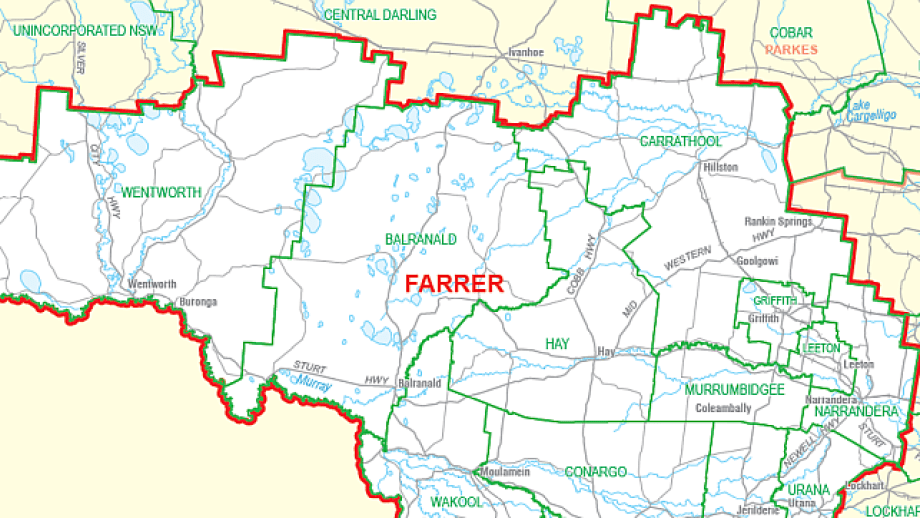
Illustrative of this problem is that none of the major parties is considered a realistic chance next weekend in a federal seat long held by the Liberals.
What does it say of this party that it can neither win in the cities nor retain one of its safest seats in the regions?
If agrarian Angus Taylor is really a viable offering as PM in two years, his party should be a shoo-in for this dependably Coalition-friendly electorate.
Yet the race in Farrer is between a second-time community independent (Michelle Milthorpe) and a rookie One Nation candidate (David Farley) who had shopped around before bobbing up on the right-wing fringe.
Remember, Sussan Ley easily defeated Milthorpe in 2025 (when the Liberals were thrashed elsewhere) with 56.19 per cent to 43.81 per cent, two-party preferred.
A year later, the Lib-Nats are mere bystanders, so detached from their once locked-in base that they've preferenced Pauline Hanson's rancorous outfit above their new nemesis, the centrist Milthorpe.
Perhaps their decline is a function of inputs. As the frustrated Liberal Party campaigner for female quotas Charlotte Mortlock noted a year ago: "The average Liberal Party member is a male in his 70s. The average Australian is a 37-year-old female. And if we are going to continue to be hamstrung to a membership that's disconnected from society, then we deserve to keep losing".
What "strangeness or mystery" underlies this pig-headedness? After all, a business facing similar difficulties might examine its products (policy), alter its structure (rules and candidate selection processes), and update its working assumptions to suit consumers.
Political parties? One senses a certain chauvinism.
The problem is most acute on the right, but Labor's record majority should not delude it into thinking it is safe.
The character of the electorate is changing. In an untethered era, 'stability', which was once considered a virtue, reads more like stubbornness and stagnation.
Voter allegiances will only become less rigid and the demands of representation, more bespoke.
Indeed, change itself is the new constant in a society challenged by artificial intelligence, social media, news curated by algorithms, shorter attention-spans, toxic billionaires.
Major parties, with their burdensome process, anodyne talking points and heavy discipline, feel unresponsive, self-serving.
Old labels are also failing. Waves of millennials and subsequent generations are shifting the needle leftwards on many social, environmental, and economic policy questions - especially those relating to wealth distribution - but perhaps rightwards on others, such as immigration and a revisionist nationalism.
This presents "big tent" parties with novel challenges.
For more than a century, their operating assumption had Australia as quintessentially conservative - if it ain't broke, don't fix it.
Progressive reform proposals needed to clear a high bar - the threshold test of which was firmly establishing that there was a problem at all.
Ethereal reform ideas like the republican push and the Voice, basically failed at this first stage.
Policy in the materialist domain was also hard but at least had a chance.
Some of the great reforms survived this process - perhaps Medicare being the greatest example.
The consensus among younger voters now, however, seems to be "oh, it's broken alright!" The burden of proof is shifting.
Why? Because regular, orthodox democratic representation has refused to address inequality.
Notwithstanding the prospects for modest, grandfathered property tax reform in next week's federal budget, it would follow years of governing party negation - even when there was wide public support for action. Examples include franking credits, negative gearing, the capital gains tax concession, a possible gas export tax, a ban on gambling advertising, and even tighter gun laws.
In each of these areas of policy, the majors reflexively stand with powerful industry lobbies and seem to listen most attentively to the (still mystifyingly influential) editorial pages of the national newspapers. Why?
Saddled with student debt, locked out of housing, betrayed on climate and stressed by violent old maniacs like Trump, Netanyahu, Putin and the Ayatollahs, younger voters have been given many reasons to lose faith in party politics that will not even state the problem.
One way to save the situation would be to show these voters that democracy works - that it can be as dynamic as the times demand and can deliver change, innovation, fairness. And a future.
A helpful trick is to imagine - as Malouf invited - what our parties look like at a genuine first glance, because that is what confronts newly eligible voters.
Mark Kenny is the Director of the ANU Australian Studies Institute and host of the Democracy Sausage podcast.