Image credit: Wikimedia, Canva
By Mark Kenny
A version of this article was originally published by The Canberra Times.
Autobiographies of the political variety do quite well and have become de rigueur for major figures.
While hardly racy, John Howard's 2010 effort, Lazarus Rising is one of the top-selling personal-political accounts in Australian publishing.
As Joshua Black says in his superb recent study of the genre, Performance Politics: Australian politicians and the stories they tell, "political books are newsworthy because politics is newsworthy".
"Their publication tends to be a major event, and their content can spawn days or weeks of coverage," he writes, singling out their adoption of a "personal, intimate tone to make extraordinary assertions about other public figures".
There's also a frankness in these "memoires politiques" which shines brightly against the dull uniformity of peloton politics - that bland tour-de-fraud of government MPs pedalling silently behind a leader - even when they're going nowhere!
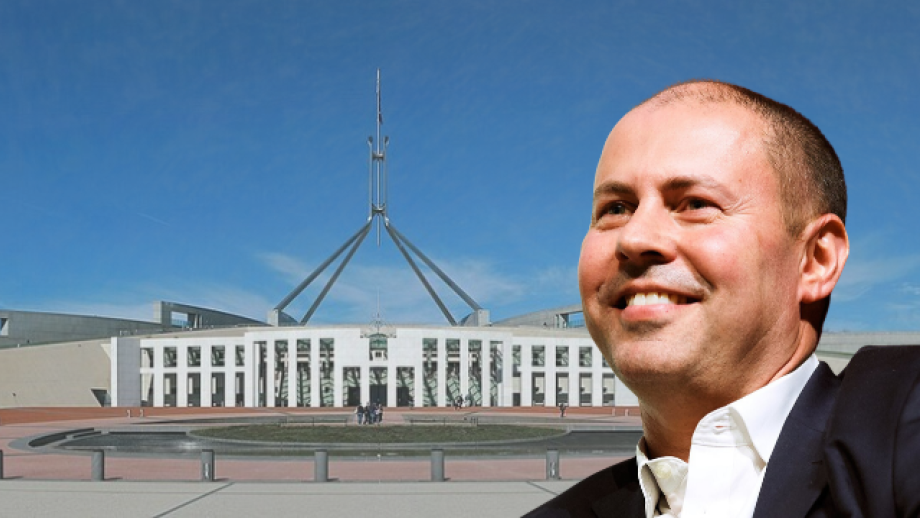
Reflecting on his time at the front of the bunch through bushfires and pandemic crises, former treasurer Josh Frydenberg has used A Grateful Son to concede, inter alia, that a hyper-ambitious Scott (multiple ministries) Morrison had his eye on the prize even as he embraced Malcolm Turnbull, declaring "he's my Prime Minister and I'm ambitious for him".
The satirical news masthead, The Shovel, captured the duplicity of Morrison's modus operandi with this coverage:
"Former treasurer Josh Frydenberg's newly published autobiography, A Grateful Son, has been jointly written by former prime minister Scott Morrison, with Frydenberg apparently unaware of the arrangement until copies went on sale this week." (LOL)
More uncomfortably for current leader, Angus Taylor, Frydenberg critiques his party's ongoing hunker beyond the nation's capital city ring-roads - or what Parisiennes derisively call "Le Periph".
"There is no goat track back to government through regional and outer suburban seats alone. We must bridge the divide and win votes in the cities, and among younger members of the electorate," he wrote in an accompanying piece for The Australian.
Again, this is hardly original, but in politics it can be "who" is saying something that matters most.
Frydenberg is right, of course, but the fact that Peter Dutton's bizarre losing strategy persists is a window into the Liberals' internal crisis - that, and its capture by Tony Abbott and his ilk.
Why now, we might ask of Frydenberg? To sell books? To test support for the leadership? To keep his options open? Probably all of the above.
Whatever the plan, the passage of a few years means it is now considered safe to tell us things we would have liked to know back then. Some, anyway.
As ever, conditions apply.
First, instances of post-parliamentary transparency come only once their publication can no longer stall the utterer's career. Second, the anecdotes chosen tend to underline the memoirist's original perspicacity.
Naturally, on the truth of any particular claims, memories differ and readers will draw their own conclusions.
Perhaps the more useful take-out from these subjective accounts is not the micro-historical detail - intriguing though it is - but the macro-behavioural commonalities among people and parties in power.
Time and again, nominally "transparent" democratic governing is revealed as having been a rolling subterfuge of manipulated timing, tactical omissions and faux unity.
Put simply, governments give us the tidy part. Only years later do we get to find out that some thought a given policy bonkers.
Yet sometimes the carapace of control cracks, offering glimpses of discord.
Differing accounts midweek between Anthony Albanese and Jim Chalmers as to which man acted first to get the ATO to park its credit-card ban are an example.
Whether it was the PM imposing a political solution or the Treasurer initiating the fix probably matters more inside the government than out, but it shows nerves are jangling and mistakes are being made.
Speaking of mistakes, Frydenberg's re-emergence invited questions over the leadership of a Liberal Party currently bobbing rudderless in One Nation's frothy wake.
Would Taylor welcome Frydenberg back in the party room? Of course not. Would he say so? Of course not.
Instantly, one thought of Sir Keir Starmer when the Mayor of Greater Manchester, Andy Burnham, was being touted as the likely candidate in a House of Commons byelection earlier this year. Burnham was not even in Westminster yet Starmer, a prime minister with a thumping majority, foolishly blocked his re-entry.
We know how that ended. British Labour lost a safe seat it should have retained. Burnham soon found another, won a byelection, and immediately took the prime ministership.
A Frydenberg redux, if it could somehow be orchestrated this term, would probably end Taylor's leadership. Yet it might also put the beleaguered Liberals back in the game. That is not nothing when oblivion looms.
So which will prevail? Self interest or the commonly invoked "national interest" via the survival of a centre-right broad-church Liberal Party?
Don't hold your breath waiting for an outbreak of creative thinking or altruism.
Black tells me Frydenberg's timing is good, "with the government under pressure and a clear vacuum of leadership at the top of the Liberal Party".
"But," he cautions, the former treasurer "has a much longer road to walk if his ambition is to be realised."
Regarding Taylor's unvarnished thoughts, they're still years away ... in his memoirs. C'est la vie.
Mark Kenny is the Director of the ANU Australian Studies Institute and host of the Democracy Sausage podcast.